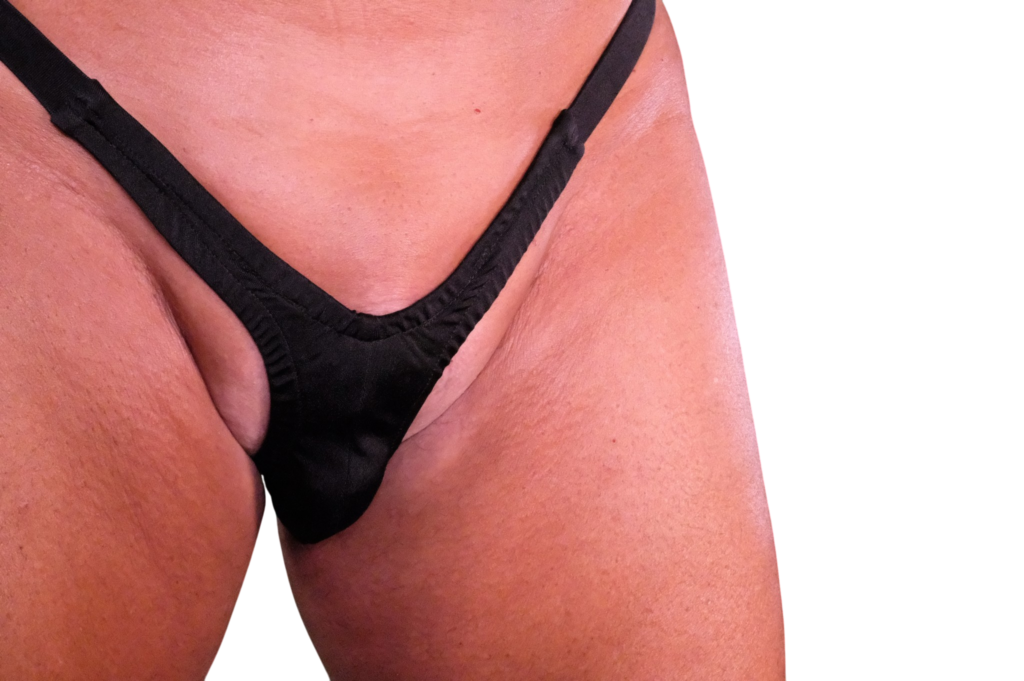
Am I a Sissy? Understanding Feminization, Feminine Men, and the Meaning of the Sissy Identity
The question “Am I a sissy?” can sound simple, but for many people it opens the door to much bigger questions:
Why do I enjoy looking feminine?
Why do I feel more comfortable presenting myself in ways traditionally associated with women?
Why do I love bikinis, thongs, feminine swimwear, panties, or other traditionally feminine clothing?
Why do I enjoy being feminized?
What if I sometimes feel more female than male—but don’t consider myself transgender?
And perhaps most importantly:
Do I need to put a label on any of this?
The answer to that last question is no.
There is no test that determines whether someone is a sissy. There is no particular swimsuit, hairstyle, behavior, fantasy, body type, or degree of femininity that automatically makes someone one.
For people who embrace the word, sissy can be a voluntary identity, role, aesthetic, lifestyle, or form of feminine expression. For other people, the same feelings are better described with terms such as feminine man, femme, femboy, gender-fluid, gender-nonconforming, crossdresser, transfeminine, nonbinary—or simply me.
Understanding the difference can help you answer the question for yourself.
What Does “Sissy” Mean Today?
Historically, sissy was frequently used as an insult toward boys and men who were considered insufficiently masculine. A sensitive, delicate, feminine, gay, shy, or gender-nonconforming male might have been called a sissy whether he wanted the label or not.
That history still matters. Some people therefore strongly dislike the word.
Others have reclaimed it.
In contemporary adult communities, sissy is sometimes used voluntarily by people who enjoy deliberately embracing femininity while having a male identity, male body, or masculine social history.
The important word is voluntarily.
Calling yourself a sissy can be empowering if the word represents something positive to you. Calling somebody else a sissy when they haven’t chosen that label can have a completely different meaning.
There Isn’t One Type of Sissy
One reason the question “Am I a sissy?” is difficult to answer is that people use the word differently.
For one person, being a sissy might simply mean enjoying extremely feminine clothes.
Another might enjoy makeup, shaved legs, long hair, feminine swimwear and presenting as one of the girls socially.
Someone else might enjoy feminization primarily as fantasy or role-play.
Another person might incorporate femininity into everyday life.
And another might feel internally feminine while continuing to identify as a man.
None of these experiences has to match anyone else’s.
Am I a Sissy If I Feel More Female Than Male?
Possibly—but that feeling alone doesn’t make you a sissy.
This is where gender identity, gender expression and personal labels need to be separated.
Imagine someone who says:
“I was born male. I don’t consider myself a transgender woman, but internally I often feel considerably more feminine than masculine.”
There are numerous ways that person might understand themselves.
They might say:
“I am a feminine man.”
“I am gender-fluid.”
“I am nonbinary.”
“I am transfeminine.”
“I am a femboy.”
“I am a sissy.”
“I am simply a man who has a very feminine side.”
Or:
“I don’t need a label.”
All can be legitimate ways of describing a personal experience.
Feeling feminine does not automatically mean you are transgender.
Likewise, not identifying as transgender doesn’t mean you have to suppress femininity.
Gender Identity and Gender Expression Aren’t the Same Thing
This distinction can make the whole subject considerably easier to understand.
Gender identity concerns your internal sense of yourself.
Gender expression concerns how you present yourself to the world.
Clothing, swimsuits, hairstyles, cosmetics, jewelry, mannerisms and other forms of presentation can all contribute to gender expression.
A person can therefore have a very feminine gender expression without identifying as a woman.
For example, someone could identify completely as male while loving:
- women’s bikinis
- thong swimsuits
- feminine-cut underwear
- painted nails
- shaved legs
- jewelry
- feminine hairstyles
- traditionally feminine colors
- makeup
- feminine body language
None of those things automatically changes that person’s gender identity.
Clothing does not determine gender.
What If I Love Being Feminized?
This is another experience frequently associated with the modern sissy identity.
For some people, feminization means deliberately moving away from conventional masculine presentation and toward femininity.
That could involve clothing, swimwear, grooming, hairstyles, cosmetics or simply allowing yourself to behave in ways you previously suppressed because you thought they weren’t masculine enough.
The emotional attraction can sometimes be stronger than the clothing itself.
You may look in the mirror after becoming more feminine and think:
This feels much more like me.
That reaction is worth exploring without assuming it must lead to a particular conclusion.
For some people feminization is occasional entertainment.
For others it becomes an important form of self-expression.
And for still others, exploring femininity eventually leads them to reconsider their gender identity.
There isn’t a predetermined destination.
You are allowed to explore without already knowing the answer.
“But I Don’t Think I’m Trans”
That’s entirely possible.
A common misconception is that femininity in a male person must eventually lead to identifying as transgender.
Human gender expression is considerably more complicated than that.
Some men have an extremely masculine presentation.
Some have a mixture of masculine and feminine characteristics.
Some are highly feminine.
A feminine man does not automatically become a woman because his femininity reaches a particular level.
There isn’t a line where someone suddenly becomes transgender because they own enough bikinis or enjoy feminine presentation enough.
Being transgender concerns identity, not compliance with clothing stereotypes.
At the same time, if exploring femininity causes someone to start questioning their gender, there is nothing unusual about taking time to examine those feelings either.
The objective isn’t to find the “correct” label as quickly as possible.
It’s to understand yourself.
Am I a Sissy Because I Wear Women’s Bikinis and Thongs?
No particular garment makes somebody a sissy.
But choosing traditionally feminine clothing because you enjoy expressing femininity may be part of why the sissy label resonates with you.
Swimwear is especially interesting because the traditional dividing line between men’s and women’s designs has increasingly become blurred.
A man can wear briefs.
He can wear a bikini.
He can wear a thong.
He can wear a G-string.
He can even purchase a swimsuit marketed specifically to women.
None of these garments possesses a gender identity.
They’re pieces of fabric.
What matters psychologically is why you enjoy wearing them and what the experience means to you.
Wanting to Blend in With the Girls at the Beach
Suppose one of your favorite experiences is going to the beach with female friends.
They’re wearing bikinis and thongs.
Instead of standing beside them wearing long men’s board shorts, you want your silhouette and overall appearance to fit naturally with theirs.
Perhaps you wear a tiny bikini too.
Maybe it’s a style sold as men’s swimwear.
Maybe it’s gender-neutral.
Maybe it originally came from the women’s department.
The label might matter less than the result.
You look around and realize that your swimsuit doesn’t seem radically different from what the women around you are wearing.
That can create a surprisingly powerful emotional experience.
Instead of:
“I’m the guy dressed like the guys.”
you may feel:
“I’m one of the girls today.”
That feeling doesn’t automatically mean you want to become a woman.
It may simply mean that social and visual femininity feels comfortable or enjoyable to you.
For someone who embraces a sissy identity, however, that experience can be an important part of it.
The Bikini Can Become a Form of Gender Expression
Consider the difference between wearing a bikini because you happen to like minimal swimwear and wearing one because it makes you feel feminine.
Externally, the two people could look almost identical.
Internally, their experiences might be completely different.
One thinks:
“I like tiny swimsuits.”
The other thinks:
“I love how feminine I feel in this.”
That second experience involves gender expression.
It still doesn’t determine gender identity, but it can tell you something important about what makes you feel comfortable.
Why the Beach Can Feel Different
Beaches and swimming pools can become particularly meaningful places for gender expression because ordinary clothing disappears.
Most people are wearing very little.
Differences between men’s and women’s traditional clothing become highly visible.
Men may be expected to wear trunks or board shorts.
Women may be expected to wear bikinis.
Someone who doesn’t relate strongly to conventional masculinity may look at those two options and instinctively feel:
I belong on the bikini side.
That can be an illuminating realization.
Perhaps you’ve never wanted a traditional masculine beach appearance.
Maybe the women’s styles always looked more interesting.
Perhaps you prefer high-cut bikini bottoms, Brazilian backs, thong backs, narrow sides or other silhouettes associated with women’s swimwear.
Eventually you may stop asking:
“Can a man wear this?”
and start asking:
“Do I want to wear this?”
That’s a very different way of thinking about clothing.
Sissy vs. Femboy
These identities can overlap, but they aren’t necessarily interchangeable.
Femboy generally describes someone—often male or male-identifying—who embraces a noticeably feminine presentation.
The term sissy can carry additional cultural associations involving deliberately embracing or celebrating a departure from traditional masculinity.
Some people happily identify as both.
Others strongly prefer one term.
A person might say:
“I am a feminine guy, but I don’t consider myself a sissy.”
Another could say:
“Femboy doesn’t really describe me. Sissy does.”
Neither is more correct.
Sissy vs. Crossdresser
Crossdressing primarily describes wearing clothing traditionally associated with another gender.
That doesn’t necessarily say anything about identity.
A man can crossdress occasionally and remain entirely comfortable identifying as male.
Someone identifying as a sissy may crossdress, but the identity can encompass a broader enjoyment of femininity rather than merely clothing.
Again, considerable overlap exists.
Sissy vs. Trans Woman
This distinction is particularly important.
A transgender woman identifies as a woman.
A person identifying as a sissy may still identify as male, partly male, gender-fluid, nonbinary or something else entirely.
That means:
A sissy isn’t necessarily a transgender woman, and a transgender woman isn’t a sissy simply because she’s feminine.
The word should never be automatically applied to transgender women.
For a trans woman, wearing a bikini isn’t necessarily crossdressing or feminization.
She’s simply a woman wearing a bikini.
Can I Feel Female Without Wanting to Transition?
Yes.
Gender feelings don’t always fit neatly into two boxes.
You might experience something like:
Male body + predominantly feminine personality + feminine presentation + no desire to identify completely as a woman.
Someone else might feel male most of the time but occasionally strongly female.
Another person might feel somewhere between male and female.
Someone might enjoy looking female without actually feeling that they are female.
Another may genuinely feel internally female but still not want social or medical transition.
These are different experiences, and exploring them doesn’t obligate you to do anything.
Ask “What Feels Good?” Before “What Am I?”
Sometimes labels make self-discovery unnecessarily difficult.
Instead of immediately trying to answer:
“Am I a sissy?”
try breaking the question into smaller ones.
Do I enjoy feminine clothing?
Do I enjoy feminine swimwear?
Do I enjoy being perceived as feminine?
Do I enjoy being mistaken for a woman?
Do I enjoy being included socially with women?
Do I enjoy temporarily becoming feminine, or do I wish I could remain that way?
Do I still feel comfortable thinking of myself as male?
Would I want people to perceive me as feminine outside recreational situations?
Does femininity feel like a costume—or does masculinity sometimes feel like the costume?
Those answers may reveal much more than a label.
What If Being Feminine Makes Me Happy?
Then that happiness is meaningful information.
You don’t necessarily need to turn it into a diagnosis, identity or life-changing decision.
Imagine getting ready for the beach.
You shave or groom the way you prefer.
You put on the bikini you’ve been looking forward to wearing.
You see your reflection.
Instead of wishing you were wearing men’s trunks, you think:
Yes. That’s me.
Then you arrive at the beach and your female friends are wearing equally tiny swimsuits.
Nobody treats your bikini as remarkable.
You aren’t trying to prove anything.
You’re simply comfortable.
That feeling may be exactly what you’re looking for.
For some people, the word sissy captures that rejection of conventional masculinity and enthusiastic embrace of femininity.
For others, it doesn’t.
You Don’t Have to “Earn” the Sissy Label
There is no certification.
There isn’t a checklist where you need seven out of ten feminine characteristics.
You don’t have to wear dresses.
You don’t have to wear makeup.
You don’t have to date men.
You don’t have to change your body.
You don’t have to dislike being male.
You don’t have to transition.
And you certainly don’t have to behave according to somebody else’s idea of what a sissy should be.
If you’re an adult and the term sissy gives you a playful, positive or meaningful way to describe your feminine side, you can choose it.
If it feels demeaning, inaccurate or overly sexualized, you don’t have to use it.
Can a Sissy Still Be a Man?
Absolutely.
This may be one of the most useful concepts for someone questioning their identity.
You can essentially say:
“I’m a man, but I’m an extremely feminine man.”
There is no contradiction there.
Masculinity isn’t a membership requirement for being male.
A man can love bikinis.
A man can wear thongs.
A man can have feminine mannerisms.
A man can prefer being around women.
A man can enjoy makeup and traditionally feminine clothing.
A man can enjoy feminizing his appearance.
And he can still say:
“I’m a man.”
If sissy is the word he prefers for that experience, that’s his choice.
And You Can Change Your Mind
Perhaps today you think:
“I’m probably a sissy.”
Five years from now you might still enthusiastically use the label.
Or perhaps you’ll prefer femboy.
Maybe femme man will describe you better.
Perhaps you’ll eventually identify as gender-fluid or nonbinary.
Maybe you’ll realize you’re transgender.
Or perhaps you’ll decide that none of these labels improve your life and simply describe yourself as a guy who loves being feminine.
Identity isn’t a contract.
Self-understanding can evolve.
The Question Behind “Am I a Sissy?”
Often the deeper question isn’t really about the word sissy.
It is:
“Is it okay for me to be this feminine?”
And that question has a much simpler answer.
Yes.
You don’t have to prove your masculinity simply because you’re male.
You don’t need permission to prefer a bikini to board shorts.
You don’t need to stop enjoying feminine clothing because somebody decided decades ago which side of a clothing store it belonged on.
And you don’t have to declare yourself transgender simply because femininity feels more natural than masculinity.
You can explore.
You can experiment.
You can discover which presentations make you happiest.
You can use a label when it helps you understand yourself and discard it when it doesn’t.
So, Am I a Sissy?
Ultimately, nobody else can answer that question for you.
If you were born male or identify partly or completely as male, feel strongly feminine, love being feminized, enjoy presenting yourself in traditionally feminine ways and find the word sissy exciting, comfortable or personally meaningful, then you may very well choose to identify that way.
But those same characteristics don’t require you to.
You could just as legitimately describe yourself as a feminine man, femme, femboy, gender-fluid, gender-nonconforming or simply someone who refuses to let traditional gender rules determine what he wears.
Perhaps the most useful conclusion is this:
Don’t start by asking which box you belong in. Start by noticing when you feel most like yourself.
If that’s standing on the beach in a tiny bikini alongside women wearing virtually the same thing, enjoying the fact that your appearance feels feminine rather than conventionally masculine, then you’ve learned something valuable about yourself.
Whether you eventually call that being a sissy, being femme, being gender-fluid, being a feminine man—or simply being yourself—is entirely up to you.